Why Were 51.3% of Gemini Confident Answers Contradicted?
Artificial intelligence is taking leaps forward — yet even the most advanced models encounter a familiar pitfall: confidently wrong answers. Recent analysis of the Gemini language model revealed a striking finding: 51.3% of its answers, delivered with high confidence, were later contradicted. This “confidence trap” phenomenon reflects a nuanced challenge that AI researchers and practitioners must grapple with as we seek reliable and auditable outputs.
In this article, we’ll explore why such a high rate of contradiction occurs, what it reveals about multi-model workflows, and how emerging orchestration techniques — such as those pioneered by Suprmind with their Sequential mode and Super Mind mode — can help mitigate these issues. Along the way, we’ll naturally reference industry giants like ChatGPT and Claude to contrast different approaches and underline the importance of disciplined AI evaluation and rollout.
The Confidence Trap in AI Language Models
The phrase confidence trap describes when an AI model expresses high certainty in an incorrect or contradictory output. This isn’t just an issue of "model accuracy" but a challenge of calibrated self-awareness and trustworthiness.
- Gemini’s 51.3% Contradiction Rate: Over half of Gemini’s confident assertions were found contradicted either by other models or human reviewers during multi-model cross-checking. This stark rate highlights the limits of relying on any single model’s internal confidence score.
- Why Confidence Scores Mislead: Many popular models like ChatGPT and Claude produce internal confidence scores or probabilistic tokens, but these do not always reflect factual reliability or handle ambiguous queries well.
Understanding this gap was the impetus behind groundbreaking tools like Suprmind’s orchestration frameworks that creatively combine multiple models in shared-thread workflows.
Shared-Thread Multi-Model Chat vs. Tab Switching
One fundamental reason we see contradictory confident answers is the workflow design of multi-model interactions. Consider:
- Tab Switching Workflow: Users or teams often run parallel queries in separate tabs or interfaces—say, a query in ChatGPT, then another in Claude. They switch contexts back and forth to compare answers but maintain isolated conversation threads. This leads to:
- Fragmented context that hinders synthesis
- Difficulty tracking and reconciling disagreements
- Higher cognitive overhead and lower auditability
- Shared-Thread Multi-Model Chat: By contrast, tools like Suprmind integrate multiple language models within a single, continuous conversation thread. This design enables:
- Aggregating and comparing different model outputs side-by-side
- Surfacing disagreements explicitly during the conversation
- Enabling transparent peer review and correction tracking
The shared-thread approach is instrumental in detecting contradictions early and managing the peer review effect, whereby models critique or confirm each other’s outputs collaboratively.
Sequential Orchestration and Compounding Reasoning
Another important approach to minimize confident contradictions is sequential orchestration, as embodied in Suprmind’s Sequential mode. Instead of models generating independent, isolated answers, they operate in a series where outputs from one step feed as inputs to the next.
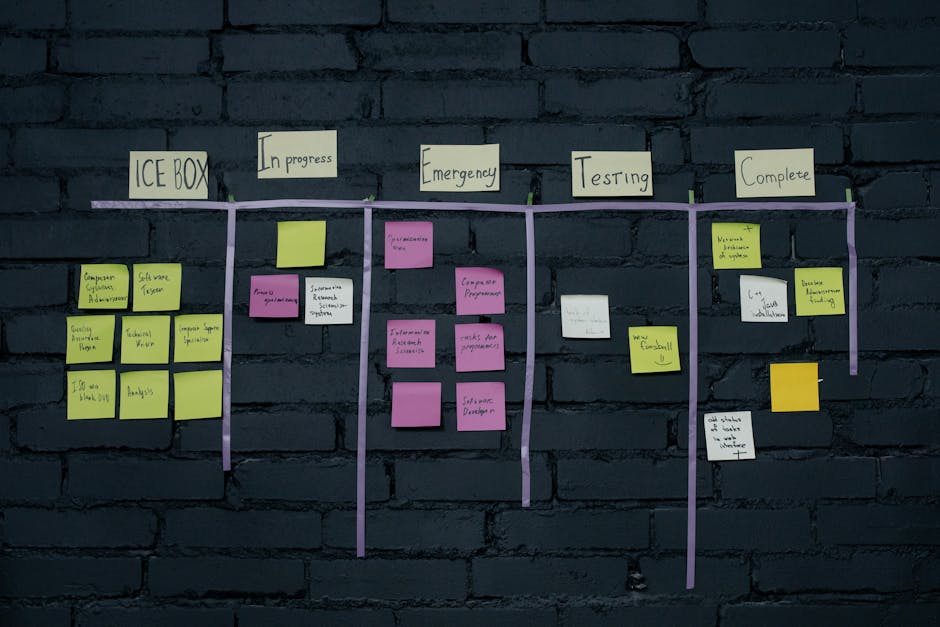
This creates a compounding reasoning chain such that:
- Initial knowledge retrieval or hypothesis formation happens with one model (eg. Claude)
- Subsequent models (eg. Gemini, ChatGPT) examine, augment, and refine that reasoning
- Errors are more likely to be caught as inconsistencies emerge in the data flow
This orchestration helps reduce the propagation of confidently wrong answers since later model stages have a chance to perform fact-checking or logical validation. It also enables thorough disagreement detection when outputs from different steps contradict earlier reasoning.
Parallel Orchestration with Synthesis and Conflict Mapping
For rapid iteration, parallel orchestration approaches — such as Suprmind’s Super Mind mode — deploy multiple models simultaneously on the same query. The system then performs high-level synthesis, explicitly mapping conflicts and agreements.
Method Description Benefits Limitations Sequential Mode Models run in ordered steps, passing data along Strong reasoning chains, error correction Longer latency, less parallelism Super Mind Mode (Parallel) Multiple models run in parallel on same prompt, followed by synthesis Faster turnaround, explicit conflict mapping Requires quality synthesis to avoid signal noiseConflict mapping helps identify which models disagree on which facts or conclusions, enabling deeper peer review and letting users track the model disagreement landscape rigorously.
Surfacing Disagreement with DCI and Correction Tracking
Perhaps most crucial in unlocking high auditability and reducing contradictions is deliberately surfacing disagreements and tracking corrections. Suprmind incorporates a Disagreement Confidence Index (DCI), a metric quantifying how much consensus or dissent exists around a given answer. This empowers:
- Highlighting responses with a high conflict score to prompt review
- Maintaining transparent correction logs that link back to specific disagreements
- Powering audits that detail the workflow history leading to the final output
Using DCI and correction tracking, organizations avoid silently accepting confidently wrong answers and instead embed peer review mechanisms directly into AI workflows. This stands in stark contrast to typical black-box use of ChatGPT or Claude where internal disagreements remain hidden.
Why Gemini’s Confidence Trap Matters
The high contradiction rate in Gemini models is a cautionary tale about the perils of trusting AI confidence blindly. It also highlights the urgency to:
- Move beyond isolated model queries to collaborative multi-model workflows
- Implement sequential and parallel orchestration to detect and resolve disagreements
- Make internal model confidence scores and disagreements explicit and actionable
- Design workflows that generate shareable, auditable artifacts—such as structured logs of conflicts and corrections
Enterprises and teams leveraging conversational AI should demand comparable frameworks to avoid falling into similar confidence traps.
Natural Lessons from Industry Leaders
ChatGPT revolutionized the conversational interface with powerful generative prowess but often lacks built-in multi-model orchestration https://seo.edu.rs/blog/suprmind-vs-poe-a-deep-dive-into-multi-ai-model-platforms-11188 and conflict tracking.

Claude
Meanwhile, innovators like Suprmind demonstrate that layering models in shared threads with explicit disagreement indexing and correction tracking yields richer, more reliable outputs.
Final Thoughts: Designing for Auditability and Trust
The road to dependable AI is paved with rigorous workflow design. Gemini’s 51.3% confident contradiction rate is not just a number—it’s a call to rethink how we combine and orchestrate AI models.
Solutions like Suprmind’s Sequential and Super Mind modes represent a new class of tools engineered to avoid fragmented "tab switching," leverage compounding multi-model reasoning, and surface peer-reviewed contradictions. When paired with export ai chat to docx transparent metrics like the Disagreement Confidence Index and thorough correction tracking, these approaches empower small teams to deploy AI outputs they can reliably audit, share, and trust.
As the AI landscape matures, eschewing the confidence trap means embracing a multi-model, multi-threaded worldview—one where contradiction is surfaced, not hidden, and model disagreement fuels refinement rather than confusion.
For any team deploying AI in strategy, research, or compliance, the critical question remains: What is the artifact I can export and send to stakeholders that clearly shows how this answer was arrived at, what was contested, and how corrections were made? Without that, confidence is just a trap.
```